
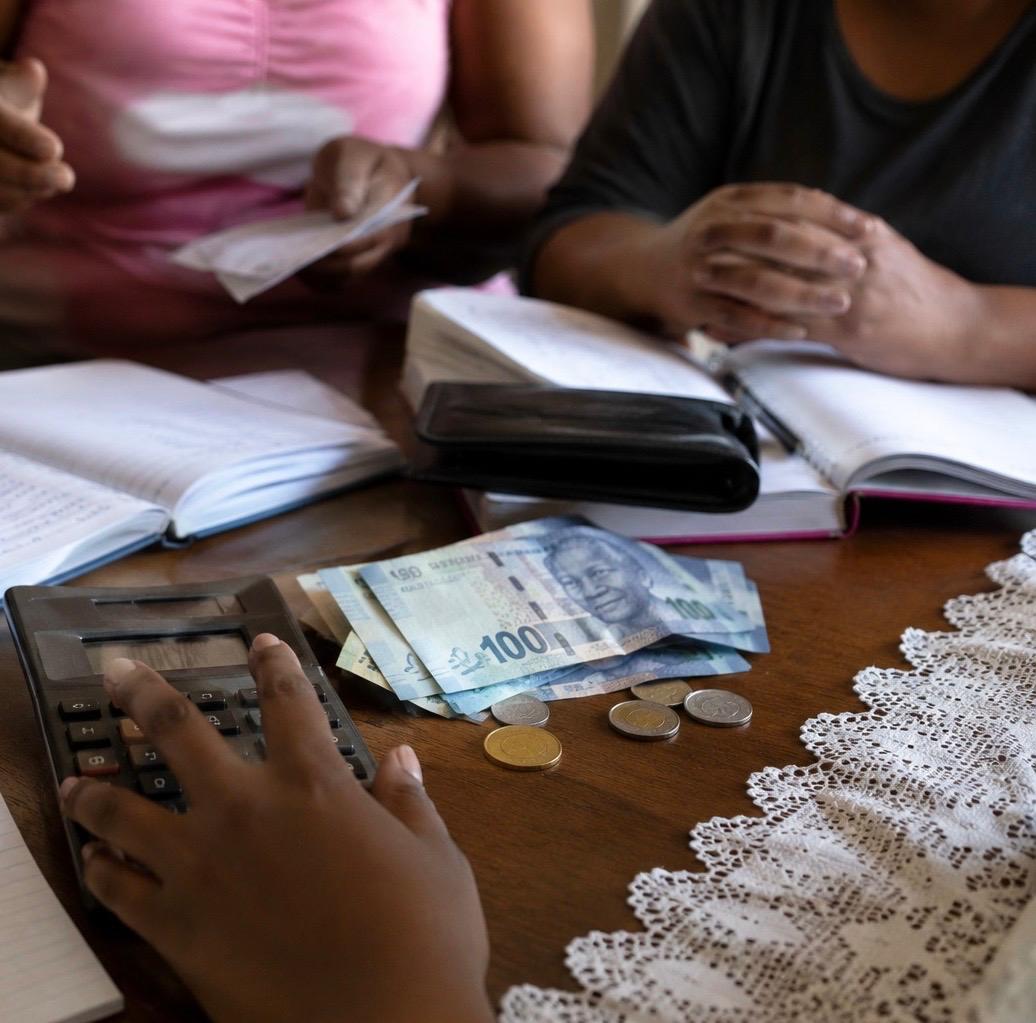
What is a stokvel?
A stokvel is a savings club: a group of people who trust each other, contribute a set amount regularly, and share the pot. It is one of South Africa's oldest and most powerful ways of saving together — and it goes by many names.
The idea, in one sentence
Everyone in the group puts in the same agreed amount, on the same day each month, into one shared pot. Nobody has to save that money alone, and nobody can quietly skip a turn — the group keeps each other honest and encouraged. When the time comes, the money is paid out: as a lump sum at year-end, in a rotating turn, or when a member is in need.
It runs entirely on two things: trust and clear records. For generations those records lived in a paper book. That is the one part Stok-Vel changes — and nothing else.
By some estimates, more than 11 million South Africans belong to a stokvel, saving billions of rand between them every year — almost all of it on trust and a handwritten book.
One tradition, many names
Across South Africa’s languages and provinces, the same idea carries a different name. Whatever your family calls it, it is the same tradition of saving together.
Stokvel
South African EnglishFrom the 19th-century “stock fairs” — auctions where farmers pooled money to buy livestock. The pooling stayed; the name grew into the tradition we know today.
Mogodisano
Setswana · SepediFrom godisa, “to grow” — members grow one another’s money together.
Mohodisano
SesothoThe Sesotho form of the same idea — a group that helps each member’s savings grow.
Mahodisano
Sesotho dialectA regional variant of mohodisano — the mutual growing of savings.
Umgalelo
isiXhosa · isiZuluFrom galela, “to pour in” — each member pours their contribution into the shared pot.
Mgalelo
isiXhosaA shorter form of umgalelo — the contribution everyone brings in.
Makgotla
SetswanaFrom lekgotla, a council or gathering — the meeting where members bring their money and decisions are made together.
Kuholisana
South African vernacularA name for members paying into and supporting one another’s needs.
Gooi-Gooi
Afrikaans · Cape vernacularLiterally “throw-throw” — everyone throws their money into the pot, round after round.
Umshayelwano
isiZuluA mutual-contribution arrangement — members put in for one another in turn.
Amafella
isiZuluA name often used for burial and mutual-aid societies — standing together when a family loses someone.
Letsema
Sesotho · SetswanaA communal work party — neighbours coming together for a shared effort; here, saving as one.
Also known simply as a savings club, grocery club, burial society, or investment club.
One savings app, whatever your group is called
Stok-Vel is a savings app built for South African stokvels — and a stokvel by any other name is still a stokvel. Whether your group is a mogodisano in Setswana, a mohodisano in Sesotho, an umgalelo in isiXhosa, a gooi-gooi on the Cape Flats, a letsema, a makgotla, an umshayelwano, a kuholisana, or an amafella burial society — it works the same way, because the tradition is the same.
Your group carries on exactly as it does today: same members, same contribution, same meeting, same bank account. What changes is the book. Every contribution is recorded and timestamped, every member can open the app and see their own savings without asking the treasurer, and the committee stops carrying the blame for a notebook nobody else can read.
- Free for every member — members never pay a cent to use it.
- Free to use right now while we onboard our first stokvels — one subscription covers the whole group later, however many members.
- Your savings stay in your stokvel’s own bank account — Stok-Vel never receives, holds or moves the money.
The kinds of stokvel
Same foundation, different purpose. Most families belong to more than one.
Savings stokvel
Members contribute a fixed amount every month and take the total out later — usually a lump sum in December to each member.
Grocery stokvel
The pool buys food in bulk at year-end, so every family stocks up for the festive season at a fraction of the shelf price.
Burial society
A mutual-aid stokvel that covers funeral costs, so a grieving family is never left carrying the expense alone.
Investment club
Members pool money to invest together — in property, shares, or a small business — and share the returns.
How a stokvel works
- 1 · Agree the rules. The group decides the contribution amount, the payout, and elects a committee — usually a treasurer, coordinator and secretary.
- 2 · Contribute together. Members meet and pay the same amount on the same day. The money goes into the stokvel’s own bank account.
- 3 · Keep the record. Someone writes down who paid what. This is the heart of the stokvel — and where trust is either kept or lost.
- 4 · Share the pot. The savings are paid out — a year-end lump sum, a rotating turn, groceries, or cover when a member is in need.
The same idea, across Africa
The stokvel is South Africa’s name for a tradition found right across the continent — people saving together, long before banks reached the village.
Common questions
Is a stokvel the same as a mogodisano or umgalelo?
Yes. Mogodisano, mohodisano, umgalelo, mgalelo, gooi-gooi, letsema, makgotla, umshayelwano, kuholisana and amafella are the same tradition in different South African languages — a group of people saving together and sharing the pot. Stokvel is simply the most common English name for it.
Is there a savings app for a mogodisano or mohodisano?
Yes — Stok-Vel is a savings app built for exactly this. Your mogodisano keeps saving the way it always has, into its own bank account, and the app keeps the record: who paid, how much, when, and what every member's balance is. Members open the app and see their own savings without having to ask the treasurer. It is free for every member; one subscription covers the whole group.
Is there an app for umgalelo, mgalelo or umshayelwano?
Yes. Stok-Vel works for any umgalelo or umshayelwano, whatever the group calls itself. Each member pours their contribution in as always — the app records it, shows the running total, and gives every member a clear view of their own savings and the group's. Your money never passes through Stok-Vel.
Can we use a savings app for a gooi-gooi or a grocery stokvel?
Yes. A gooi-gooi, grocery stokvel or December savings club runs perfectly on Stok-Vel. The app tracks every round, every contribution and every payout, so when the year-end share-out or the bulk grocery buy comes, the numbers are already agreed and nobody has to reconstruct them from a notebook.
Is there an app for a burial society or amafella?
Yes. Burial societies and amafella groups use Stok-Vel to record monthly contributions and keep members' cover up to date, so that when a family loses someone, the record is clear and there is no argument about who was paid up. Stok-Vel keeps the book — it does not hold or pay out the money itself.
Is the stokvel savings app free?
Yes, right now it is. We are onboarding our first stokvels in person and no group is being charged to use it. Members never pay anything either way, and there are no per-member charges — when a subscription is introduced later it will be one price for the whole group, however many members it has, with clear notice before anything changes.
Is a stokvel legal in South Africa?
Yes. Stokvels are a long-recognised, lawful form of collective saving. Many groups choose to affiliate with a body like NASASA (the National Stokvel Association of South Africa), but a stokvel is free to run on its own constitution and rules.
Do we need a bank account for our stokvel?
Most groups open a dedicated bank account in the stokvel's name so the pooled money is kept separate from anyone's personal funds. The committee — usually a treasurer, coordinator and secretary — manages it together.
What is the difference between a stokvel and a burial society?
A burial society is a type of stokvel focused on one purpose: covering funeral costs for members and their families. Other stokvels save for cash payouts, groceries, or investments. They all share the same foundation — regular contributions into a common pool.
Does Stok-Vel hold our stokvel's money?
No. Stok-Vel is a record-keeper, not a bank. Your money stays in your own stokvel bank account exactly as it does today — the app only keeps the records transparent and tamper-evident. We never receive, hold, or move your savings.
Stok-Vel is a record-keeper, not a bank. However your stokvel saves, the money stays in your own account — we simply replace the paper book with a shared, tamper-evident record every member can trust.
However you say it, run it with confidence
Bring your stokvel's records into one clear, shared book — and keep saving exactly as you always have. Free while we onboard our first stokvels.
Free while we onboard our first stokvels · unlimited members · we never touch your savings